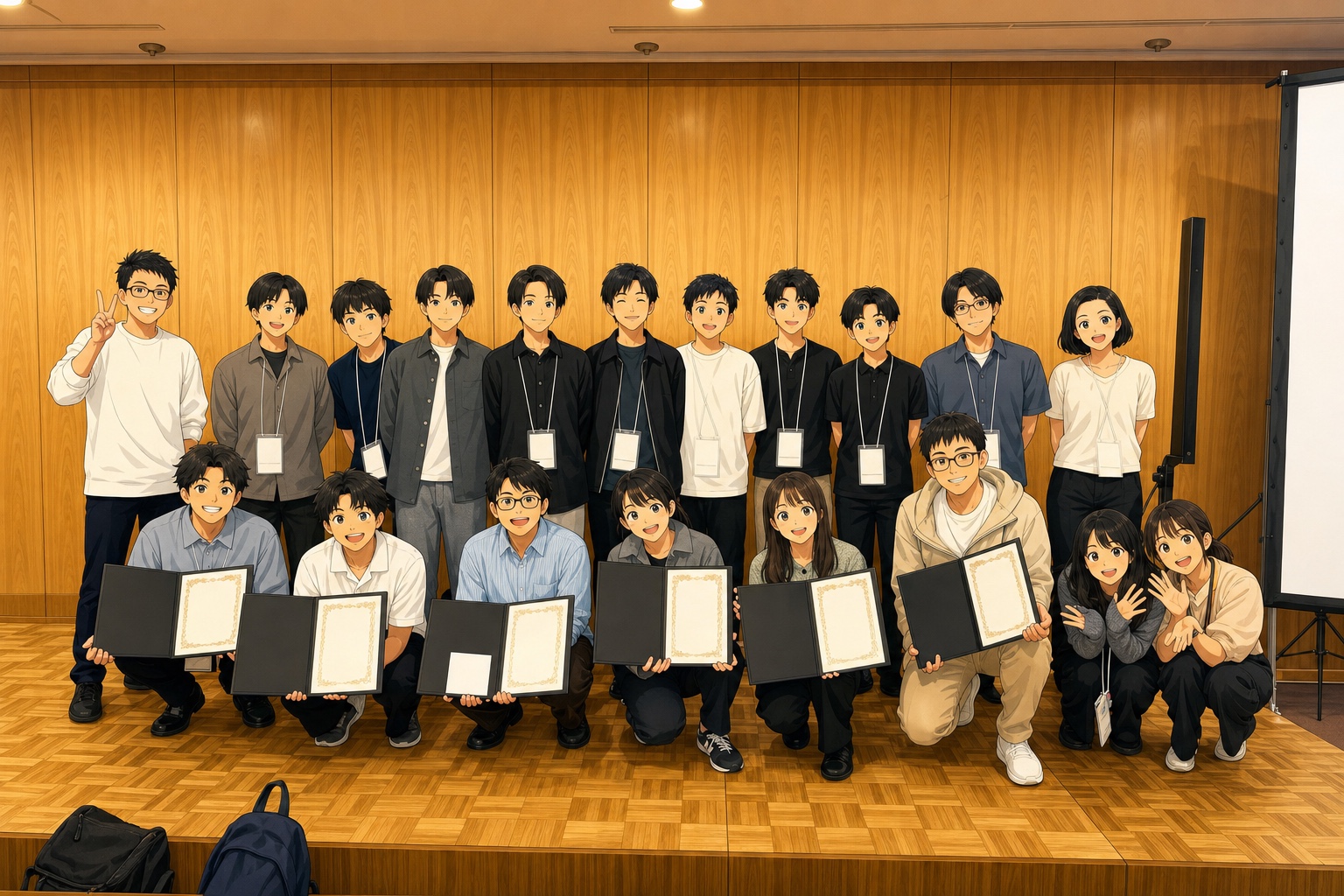
10月19日から23日まで浜松(アクトシティ浜松)で開催されたコンピュータセキュリティシンポジウム (CSS 2026) にて、当研究室から13件の研究を発表しました。この内、6件の発表に対して表彰を頂きました(優秀論文賞3件、学生論文賞2件、奨励賞1件)。受賞された皆さん、おめでとうございます!当日発表でのフィードバック、ならびに表彰等で奨励頂きましたことを糧に、次の研究につなげたいと思います。
- Lachlan Moore, Yinan Zhao, Go Tsuruoka, Allan Wirth and Tatsuya Mori. “Investigating Privacy Transparency Gaps in Connected Vehicle Interfaces: A Think-Aloud Study Design.” コンピュータセキュリティシンポジウム 2026 論文集 (CSS 2026),2026年
- Zhihe Zhang, Shuo Peng and Tatsuya Mori. “SoK: The Widening Gap Between Adversarial Patch Attacks and Modern Object Detectors.” コンピュータセキュリティシンポジウム 2026 論文集 (CSS 2026),2026年 (学生論文賞)
- 海老根 佑雅, 野本 一輝, 鶴岡 豪, 田中 優奈, 森 達哉. “特徴点ベースvSLAMに共通する脆弱性を突く敵対的映像攻撃と防御手法の評価.” コンピュータセキュリティシンポジウム 2026 論文集 (CSS 2026),2026年 (優秀論文賞)
- 小林 航太朗, 渡邉 卓弥, 高田 雄太, 熊谷 裕志, 神薗 雅紀, 森 達哉. “ブロックチェーンアドレスポイズニングにおけるクロスチェーン先回り攻撃と攻撃者戦略の分析.” コンピュータセキュリティシンポジウム 2026 論文集 (CSS 2026),2026年
- 迫本 澪, 渡邉 龍星, 古橋 俊輝, 森 達哉. “悪性SIMアプレットによる通信チャネル占有攻撃の脅威評価.” コンピュータセキュリティシンポジウム 2026 論文集 (CSS 2026),2026年 (優秀論文賞)
- 佐藤 光優, 鶴岡 豪, 野本 一輝, 田中 優奈, 森 達哉. “自動運転における HD マップ改ざん攻撃の体系化と End-to-End 評価.” コンピュータセキュリティシンポジウム 2026 論文集 (CSS 2026),2026年 (学生論文賞)
- Shuo Peng, Zhihe Zhang, Go Tsuruoka and Tatsuya Mori. “Vehicle-Agnostic Multi-Class Attack Attribution on the CAN Bus.” コンピュータセキュリティシンポジウム 2026 論文集 (CSS 2026),2026年 (優秀論文賞)
- 平井 航大, 田中 優奈, 野本 一輝, 鶴岡 豪, 森 達哉. “V2X に対する攻撃の体系的評価によるコンポーネントレベルとシステムレベルの乖離の検証.” コンピュータセキュリティシンポジウム 2026 論文集 (CSS 2026),2026年
- 鶴岡 豪, 佐藤 貴海, 飯島 涼, 森 達哉. “ブラックホール攻撃: Occupancy Predictionを用いた自動運転に対するハイジャック攻撃の提案とその対策.” コンピュータセキュリティシンポジウム 2026 論文集 (CSS 2026),2026年 (奨励賞)
- 斧田 洋人, 鶴岡 豪, 末次 響, 大西 健斗, 拓矢 東, 小関 義博, 中井 綱人, 森 達哉. “敵対的パッチによる偽障害物生成攻撃のシステムレベル評価.” コンピュータセキュリティシンポジウム 2026 論文集 (CSS 2026),2026年
- Yinan Zhao, Lachlan Moore, Sara Rampazzi and Tatsuya Mori. “Detecting Sensor Attacks on Autonomous Vehicles through Latent Correlations.” コンピュータセキュリティシンポジウム 2026 論文集 (CSS 2026),2026年
- 末次 響, 鶴岡 豪, 斧田 洋人, 田中 優奈, 野本 一輝, 森 達哉. “近傍の物体に擬態した敵対的パッチによるターゲット物体検出の妨害攻撃.” コンピュータセキュリティシンポジウム 2026 論文集 (CSS 2026),2026年
- Jiadong Liu and Tatsuya Mori. “An Empirical Study of the Robustness of World-Model-Based Planning.” コンピュータセキュリティシンポジウム 2026 論文集 (CSS 2026),2026年